Friday, September 8th, 2006
San Albino Skyward
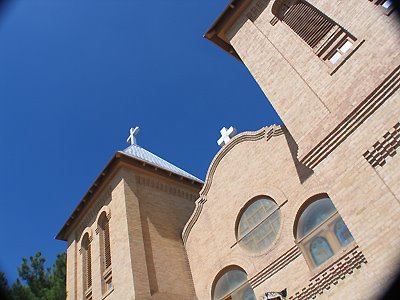
Another view of San Albino.
The News — The Secrets — The History!
Thursday, September 7th, 2006
Irrigation existed before civilization. Irrigation was one of the fathers (or mothers, if you prefer) of civilization.
The Skilled Irrigator was already a model of righteousness at the beginning of Sumerian civilization, around 8000 BC. The highest god in many early agricultural cultures was praised as “irrigator of all things.”
The root of irrigation means “to lead water to, to refresh.”
Unless you are in agriculture, you probably ignore irrigation, or maybe think about it only as a “consumer of water.”
But you are dependent upon irrigation for what you eat, and for much of what you wear.
Irrigation is close in Mesilla, which still has its partnership with the land. Many houses have 15 to 30 pecan trees and irrigation rights from the Rio Grande.
Irrigation canals thread the Village. Here’s some of what you can see if you look.
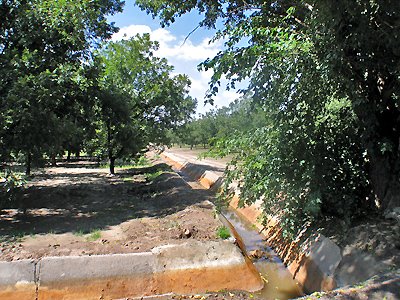
Cement canals prevent water loss into the ground, one of the goals of a Skilled Irrigator.

A control gate.

Canal and gate.

Gate control.
Tags: The Skilled Irrigator
Monday, September 4th, 2006
The Old Mesilla Courthouse is now a gift shop.

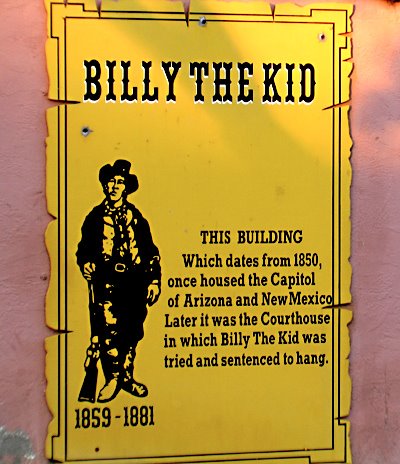
As indicated by the sign, the Courthouse dates from 1850.
Here’s a photo of the courthouse after it became the Elephant Butte Saloon, taken some time in the 1920s. The walls appear to be brick, but the bricks are painted, not real, except for the distinctive decorative brick along the roof, which you can see in both the old and the new photographs. Notice also that the corner of the building has been sliced off to make the current entrance.

See also:
Billy the Kid’s Grave
Did Billy the Kid Stay at La Posta in Mesilla?
Mesilla Museum Display
Billy the Kid Display – Mesilla
Saving the Pat Garrett Marker
Billy’s DNA
Billy the Kid
Saturday, September 2nd, 2006
Here’s a satellite shot of the Mesilla plaza.
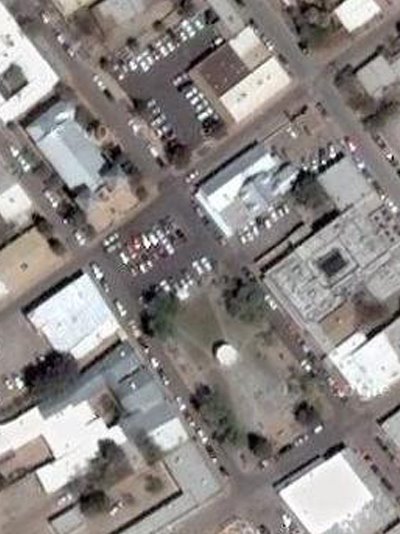
You can see clearly the octagonal bandstand located in the center of the plaza. San Ablino is located north of the plaza, just above the three rows of parking cars.
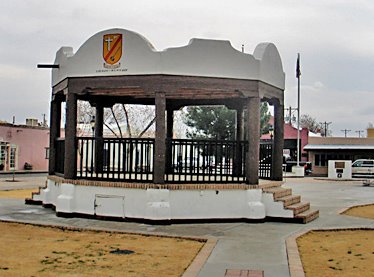
Mesilla bandstand.
Tags: Mesilla Satellite Image
Friday, September 1st, 2006
In spite of the rain and flooding, the 2006 Hatch Valley Chile Festival will open as planned. The cost of the Festival is $5. One dollar of the fee goes to a non-profit fund for the victims of the recent flooding in Hatch.
Here’s the Saturday schedule:
Saturday — September 2
10 am — Parade Downtown Hatch
12 noon — 2006 Queen Coronation
1-3 pm — Music by Ginny Mac
All Afternoon Various Chile Contests, Booths, Food
4-7 pm — Music and Dance to “The Silver Bullet Band”
Here’s the Sunday schedule:
Sunday — September 3
12 pm — Cobre Folklorio Dancers
All Afternoon Various Chile Contests, Booths, Food
1-2 pm — Music by Scotty Fitch
2 pm — Queen’s Auction
3-5 pm — Music & Dance by Cameron the DJ
This is the 35th annual festival.
Tags: Hatch Chile Festival
Thursday, August 31st, 2006
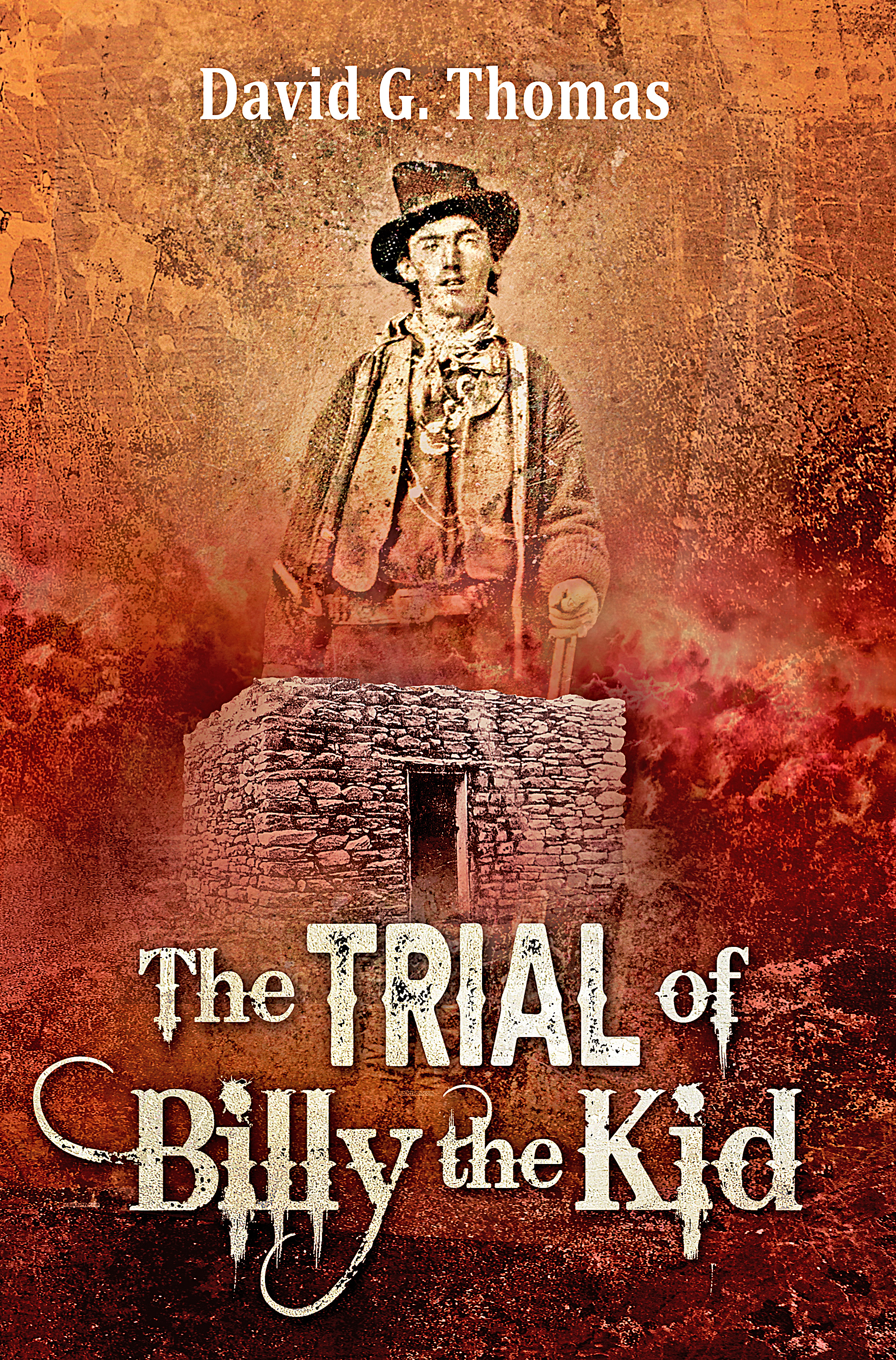
Still standing in the southeast corner of the Mesilla plaza is the courthouse and jail where Billy the Kid was tried and sentenced to death by hanging.
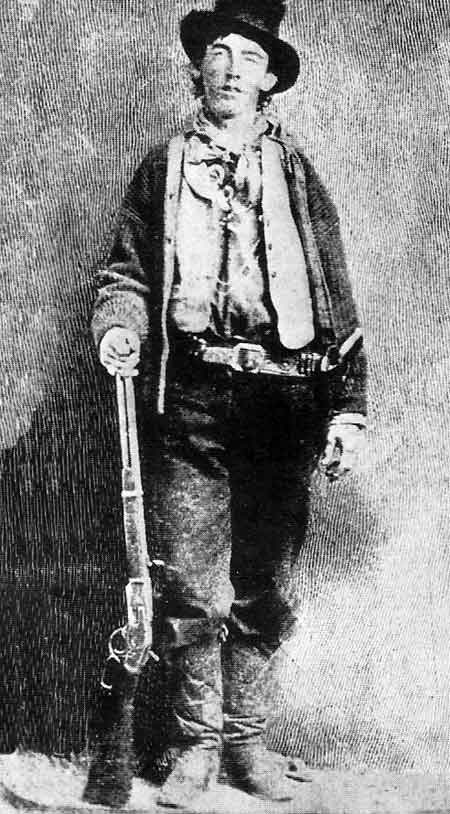
The only authentic picture of Billy.
Billy had been captured December 23, 1880.
On March 28, 1881, he was transported to Rincon by train and from there to Mesilla by wagon for trial for the murders of Andrew “Buckshot” Roberts and Sheriff William Brady. The indictment for killing Roberts was a federal indictment. The indictment for killing Brady was a territorial indictment. The territorial district court handled both jurisdictions, with the federal cases tried first.
His trial for killing “Buckshot” Roberts began on March 30, 1881. The case against him in this trial was thrown-out on the grounds that the killing took place on private land, not public land, and the federal government thus had no standing to prosecute.
The trial for the killing of Sheriff Brady began April 8. The judge presiding, Judge Bristol, dismissed Billy’s defense attorney from the Roberts trial, probably because of the change in jurisdiction, and appointed John D. Bail and Albert Fountain to represent him.
On April 13. the jury brought in its verdict: guilty. The judge then sentenced Billy to death by hanging, to be carried out on May 13, 1881 in Lincoln, New Mexico.
In an interview later that day in the Mesilla News, Billy said the following:
“Well, I had intended at one time to not say a word in my own behalf, because persons would say, ‘Oh, he lied’; Newman gave me a rough deal; has created prejudice against me, and is trying to incite a mob to lynch me. He sent me a paper which shows it; I think it a dirty, mean advantage to take of me considering my situation and knowing I could not defend myself by word or act. But I suppose he thought he would give me a kick down hill. Newman came to see me the other day; I refused to talk to him or tell him anything; but I believe the News is always willing to give its readers both sides of a question.”
“If mob law is going to rule, better dismiss judge, sheriff, etc., and let all take chances alike. I expected to be lynched in going to Lincoln. Advise persons never to engage in killing.”
Three days later he was taken to Lincoln. It was from the Lincoln courthouse that Billy escaped on April 28, killing two deputies.
See also:
Billy the Kid’s Grave
Did Billy the Kid Stay at La Posta in Mesilla?
Mesilla Museum Display
Billy the Kid Display – Mesilla
Saving the Pat Garrett Marker
Billy’s DNA
Old Mesilla Courthouse
Thursday, August 31st, 2006
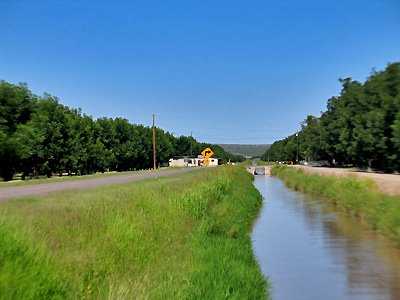
Pecans are a huge agricultural industry around Mesilla. There are an estimated 18,000 acres of pecans in the county (Doña Ana).
Pecans, because of their wonderful flavor, have been called the Cadillac of nuts.
This is a wonderful time of the year to drive through the pecan groves. The trees are lush green and the patterns made by the sunlight, shadows, and rows of trees are dazzling.


The pecans in this area are irrigated primarily with water from the Rio Grande. As a result, there are many irrigation canals feeding the groves.
Tags: Cadillac of Nuts Pecans
Wednesday, August 30th, 2006
The Gadsden Purchase was signed in Mesilla on November 16, 1854. This is reflected in the Mexican name for the Purchase, the Treaty of Mesilla. A bronze plaque in the Mesilla plaza commemorates this agreement between the two countries.
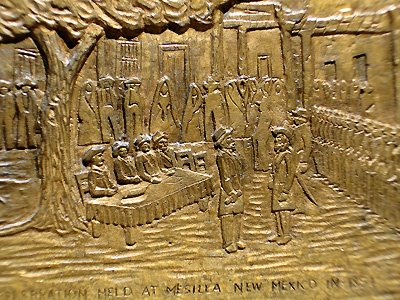
Following the signing of the treaty, the Mexican flag was lowered and the American flag raised. The people of Mesilla, who had previously been citizens of Mexico, became citizens of the United States. The agreements between Mexico and the inhabitants of the Gadsden Purchase area were respected by the US Government, including all land grants made by Mexico that were eventually adjudicated as valid.
Las Cruces, which today adjoins Mesilla, was just outside the Purchase area, being already part of the United States.
See also:
Rough and Ready — Butterfield Stage Stop
Tags: Mesilla Plaque
Saturday, August 26th, 2006
Here’s a view of the Mesilla plaza at twilight.

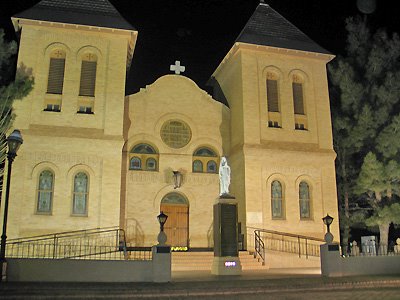
Here are two more views of San Albino.

Tags: San Albino Church
Saturday, August 26th, 2006
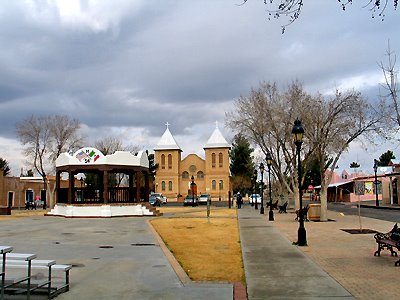
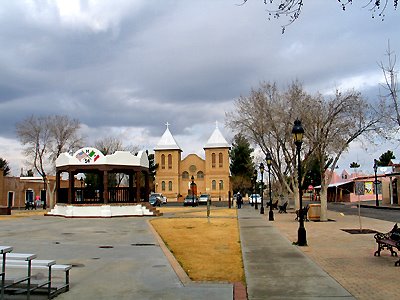
The Mesilla plaza. You can see the San Albino Catholic Church at the end of the plaza.
Tags: Mesilla Town Plaza